CHILDREN AND TEENS
More than you remember
School-age children need 9 to 12 hours a night and teenagers 8 to 10, according to the CDC.
Check an age
 doodlebed
SLEEP, BY THE NUMBERS
7 HOURS or more
Less every decade, but never as little as you might think.
A newborn needs 14 to 17 hours a day. A teenager needs 8 to 10. Most adults need at least 7, and almost a third of US adults get less. Here are the official ranges by age, and what a bedroom built for sleep looks like.
Plain English, with the sources linked.
Updated
Find your hoursTHE SHORT ANSWER
The recommended amount falls from
14–17 hours at birth to 7–8 hours at 65.
CHILDREN AND TEENS
School-age children need 9 to 12 hours a night and teenagers 8 to 10, according to the CDC.
Check an ageADULTS
Adults aged 18 to 60 need 7 hours or more. In 2024, nearly a third of US adults slept less.
See the numbersTHE BEDROOM
Block out light, keep noise down and keep the room cool but not cold. Regular hours help too.
Four simple changesHOURS BY AGE
Pick an age group to see the recommended hours of sleep per 24 hours. The ranges come from the CDC, which bases its children’s figures on a 2016 American Academy of Sleep Medicine consensus.
These are ranges for healthy people, not targets to hit exactly. Needs vary from person to person, and the bar shows the top of the range as a share of the day.
TWO NUMBERS WORTH KNOWING
One shows how often adults fall short.
The other is a range for the youngest sleepers.
30.5% of adults
Slept less than 7 hours a day
The National Center for Health Statistics found the share was highest, 34.5%, among adults aged 50 to 64, and 27.2% among both 18 to 34 year olds and people aged 65 and over.
ADULTS · US SURVEY 2024
16–20°C
Recommended room temperature
The UK safer-sleep charity recommends this range so that babies do not get too hot. To check, feel the chest or the back of the neck: cooler hands and feet are normal.
BABIES · THE LULLABY TRUST
Both are guides rather than rules. The survey describes US adults, and the Lullaby Trust notes that every baby is different.
TONIGHT’S BEDROOM
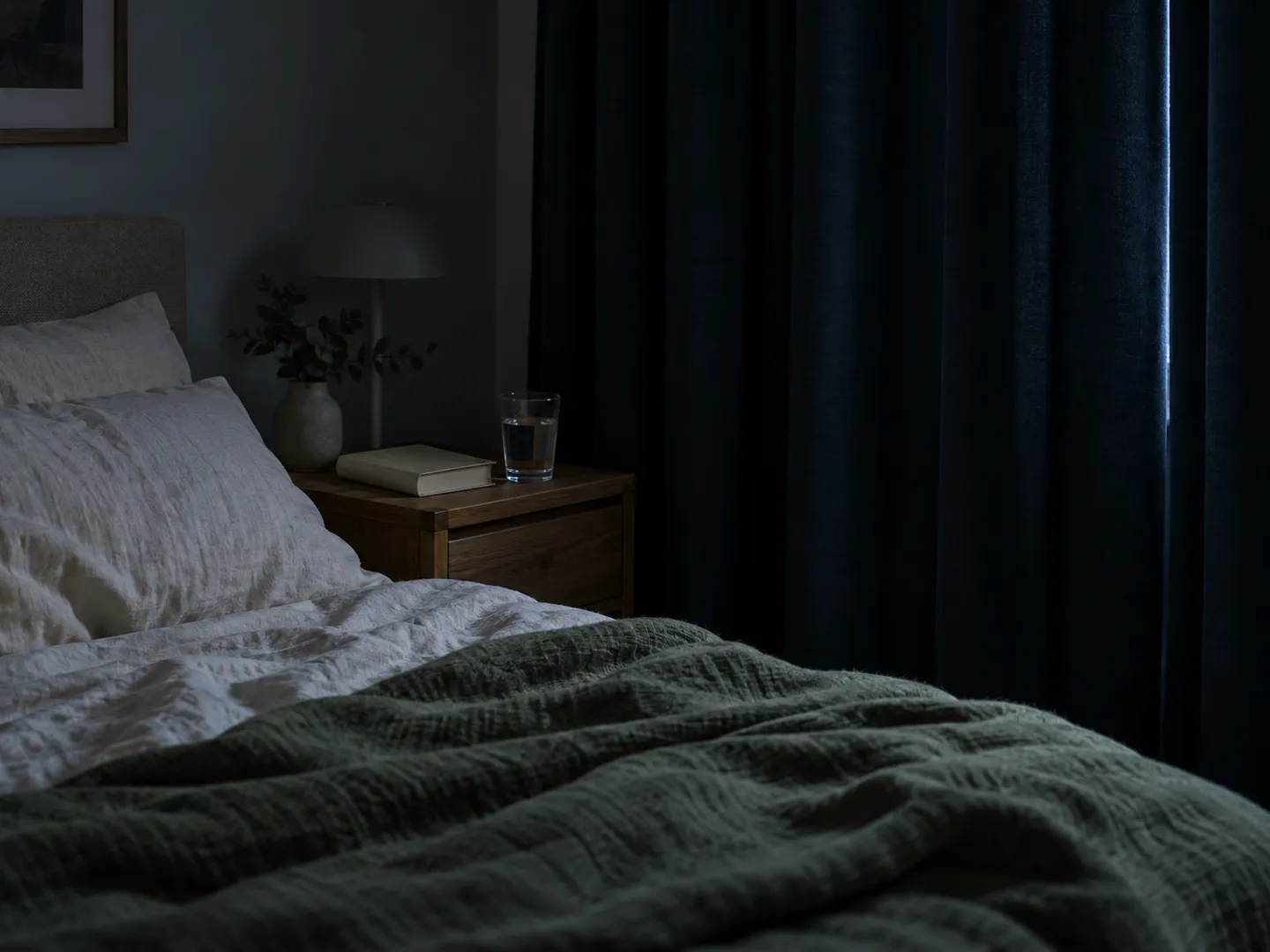
Go to bed and get up at the same time each day. MedlinePlus says a regular bedtime trains your body and brain to wind down.
Keep the bedroom cool enough, but not so cool that you wake up cold. For a baby’s room, the Lullaby Trust recommends 16 to 20°C.
Use curtains, blinds and doors to block light from outside and from devices, and make the room as quiet as you can.
Silence devices that remind you of things to do, and go easy on coffee, tea and caffeinated drinks in the afternoon and evening.
SLEEP FACTS
The CDC’s ranges fall from 14–17 hours for newborns to 9–12 hours at school age, 8–10 hours for teenagers and 7 or more hours for adults.
In 2024, 30.5% of US adults slept less than 7 hours on average in a 24-hour period. Men (30.6%) and women (30.4%) were almost identical.
In the same survey, 15.4% of adults had trouble falling asleep and 18.1% had trouble staying asleep. Women reported trouble staying asleep more often than men: 21.4% against 14.6%.
A panel of 13 experts in sleep medicine and research reviewed and graded 864 scientific articles before the American Academy of Sleep Medicine published its recommendations for ages 4 months to 18 years in June 2016.
The US National Heart, Lung, and Blood Institute says naps can give a short-term boost in alertness, but they do not supply all the other benefits of night-time sleep.
QUICK QUESTIONS
Short answers to the questions people ask most.
The US Centers for Disease Control and Prevention (CDC) recommends 7 or more hours a day for adults aged 18 to 60, 7 to 9 hours for ages 61 to 64, and 7 to 8 hours for people aged 65 and over.
The CDC lists 14 to 17 hours for newborns (0 to 3 months), 12 to 16 hours for infants, 11 to 14 hours for 1 to 2 year olds and 10 to 13 hours for 3 to 5 year olds, all including naps. School-age children (6 to 12) need 9 to 12 hours and teenagers 8 to 10 hours.
The Lullaby Trust recommends a room temperature of 16 to 20°C for babies, so that they do not get too hot. It suggests feeling the chest or the back of the neck to check, and notes that cooler hands and feet are normal.
Only partly. The US National Heart, Lung, and Blood Institute says naps may give a short-term boost in alertness and performance, but they do not supply all the other benefits of night-time sleep.
Very common. A 2024 US national survey found that 30.5% of adults slept less than 7 hours on average in a 24-hour period, and 18.1% had trouble staying asleep.
Sources
A NAME TO REST ON
doodlebed.com is part of the DoodleSale portfolio. It isn't in an auction right now, but you can ask about leasing it.